
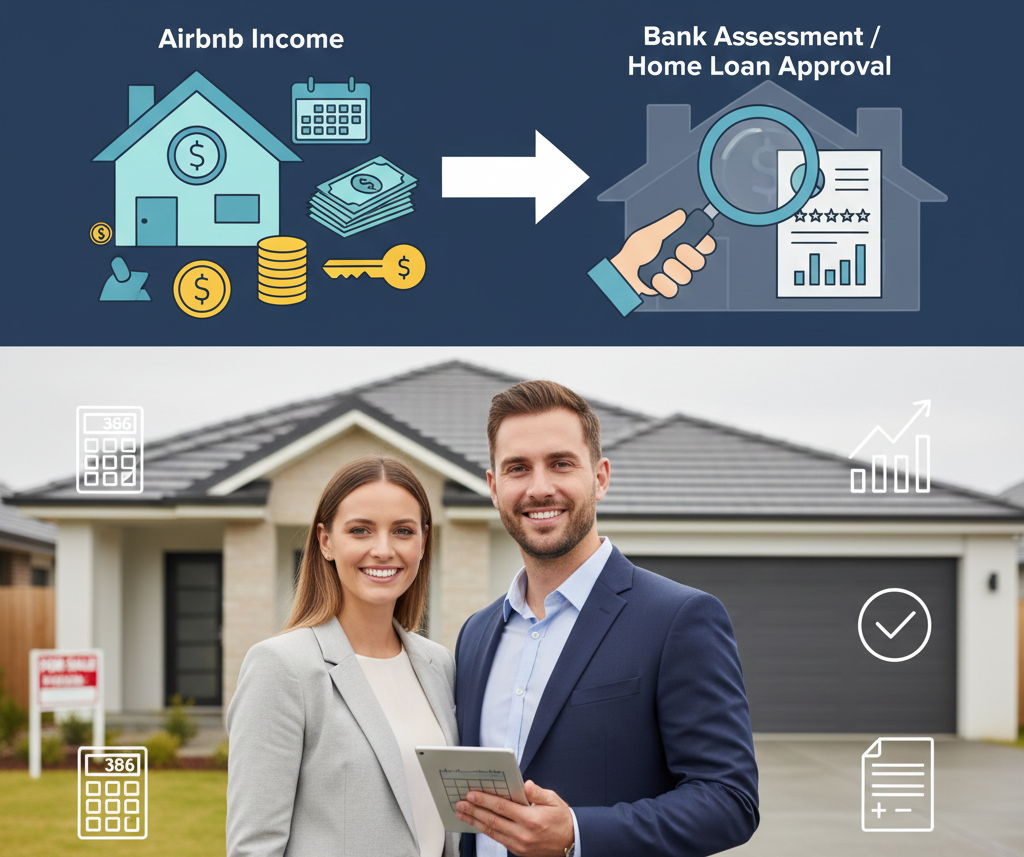
Using Airbnb income to qualify for a home loan in Australia can be a powerful strategy, but only when it aligns with how banks actually assess risk. While Airbnb dashboards may show strong cash flow, lenders rely on Australian Taxation Office (ATO)-verified figures, historical consistency, and conservative assumptions when calculating serviceability. Understanding this framework helps you structure your borrowing strategy correctly from your first purchase through to a growing property portfolio.
Why Airbnb Income Is Treated Differently by Banks?
Short-term rental income is assessed differently from traditional rental income because it fluctuates with the seasons, pricing, and demand. Australian lenders consider Airbnb income to be variable and closer to self-employed earnings rather than fixed rental income. As a result, banks rely on historical performance rather than future booking projections when assessing an Airbnb home loan in Australia.
Australian lending standards are shaped by prudential guidance from APRA and responsible-lending obligations enforced by ASIC. These frameworks require lenders to ensure borrowers can meet repayments even if short-term rental income declines.
For a broader understanding of how Airbnb income fits into a long-term property strategy, including market risks, location selection, and cash-flow planning, see The Ultimate Guide to Investing in Airbnb Properties in Australia.
Long-Term Lease vs Airbnb: How Banks View the Difference
Banks in Australia assess long-term rental income using lease agreements and market appraisals. Airbnb income, however, must be proven through tax returns, booking registers, and consistent banking evidence. Lenders apply income shading to reflect vacancy risk and volatility when assessing a short-term rental income home loan.
This difference explains why Airbnb income usually strengthens borrowing power rather than replaces employment income entirely.
What Documents Do Banks Require for Airbnb Home Loans?
Banks rely on verified financial records when assessing how banks assess Airbnb income in Australia. Platform summaries alone are insufficient. Lenders prioritise documentation that confirms the income declared to the ATO.
Required Evidence
- Two years of full personal tax returns
- ATO Notice of Assessment
- Rental schedules showing net income
- Bank statements showing consistent deposits
- Accountant letter (if recently converted to Airbnb)
Evidence Priority Order
This hierarchy reflects lender compliance obligations and underpins Airbnb mortgage assessments.
How Airbnb Expenses Affect Borrowing Power
Airbnb properties incur higher operating costs than traditional rentals, such as cleaning, utilities, and management fees, which directly reduce taxable income. Since Australian banks assess net income for loan serviceability, these higher deductions can significantly lower your borrowing power.
Typical Airbnb Expense Ranges
If gross receipts are $60,000 and expenses total $25,000, the assessable income becomes $35,000 before lender shading is applied. This is a key factor in Airbnb income borrowing power calculations.
How Banks Calculate Serviceability Using Airbnb Income
Australian lenders calculate serviceability by combining assessable income streams and testing them against expenses, interest-rate buffers, and debt-to-income limits. Airbnb income is added after shading and treated as supplementary when assessing a short-term rental income home loan.
Shading Illustration
| Net Airbnb Income | Assessable After Shading |
| $20,000 | $10,000–$16,000 |
| $35,000 | $18,000–$28,000 |
| $50,000 | $25,000–$40,000 |
The accepted amount varies by lender policy, location, and history length.
Why Consistency Matters More Than Peak Income
Banks place greater weight on consistency than occasional high-performing months. Regular deposits, predictable seasonal patterns, and stable expenses improve acceptance of Airbnb income for home loans in Australia.
Positive Indicators
- Regular weekly or fortnightly deposits
- Similar year-on-year seasonal performance
- Moderate, consistent expense ratios
- Separate bank account for Airbnb income
- Strong demand location
Risk Indicators
- Short operating history
- Large unexplained income gaps
- Extremely high deductions
- Non-compliant council zoning
To improve your approval chances for an Airbnb mortgage in Australia, you must strategically manage these factors.
Location and Zoning Considerations
Location significantly affects how banks assess Airbnb income. Properties in established tourism areas are viewed more favourably, while those in restricted council zones may face reduced acceptance or complete exclusion from serviceability.
Before relying on short-term rental income home loan strategies, zoning compliance should be confirmed.
Using Airbnb Income After Converting a Property
When a property is newly converted to Airbnb use, lenders generally require at least 12 months of trading history before including the income in serviceability. During this period, employment income remains the primary approval driver for an Airbnb home loan in Australia.
Practical Preparation Steps
- Maintain a dedicated Airbnb bank account
- Retain detailed booking records
- Lodge conservative deductions early
- Obtain Accountant confirmation
- Reassess borrowing power after 12–24 months
This staged approach supports long-term borrowing flexibility.
Differences Between Lenders in Australia
Not all lenders assess Airbnb income the same way. Major banks, non-banks, and specialist lenders apply different shading levels and evidence standards when assessing Airbnb income borrowing power.
- Major Banks: 50–80% of net income
- Non-Bank Lenders: 70–90% of net income
- New Hosts: Often excluded
Understanding lender appetite is critical when structuring an Airbnb mortgage strategy in Australia.
Regulatory Framework Behind Airbnb Income Assessment
Australian lenders operate under prudential and consumer-protection frameworks:
- APRA (Australian Prudential Regulation Authority) – serviceability buffers and risk management
- ASIC (Australian Securities and Investments Commission) – responsible-lending obligations
- ATO (Australian Taxation Office) – income verification and deductions
Frequently Asked Questions
Can banks use gross Airbnb income for a home loan in Australia?
No. Australian lenders assess serviceability based on your ATO-verified net income (income after expenses), not gross platform earnings. While dashboard summaries can support your application, the official figures from your lodged tax returns form the definitive basis for the assessment.
How much Airbnb income will lenders accept?
Most Australian lenders will accept between 50% and 80% of your net Airbnb income for serviceability, depending on factors like income consistency, property location, and individual bank policy. This ‘shading’ of your income directly determines your borrowing power.
What if Airbnb income is new?
If the Airbnb operation is new, lenders generally require 12 months of history before including it. Until then, the income is usually excluded or treated as minor supplementary income.
Final Thoughts
Airbnb income can strengthen your borrowing position in Australia, but only if it is structured correctly to align with bank risk assessments. By using ATO-verified figures, maintaining consistent records, and understanding lender shading rules, you can ensure your home loan strategy supports long-term property goals, not just short-term approval.
If you would like a personalised serviceability assessment that reflects genuine Airbnb reality across Australia, reach out to Pinpoint Finance today.