
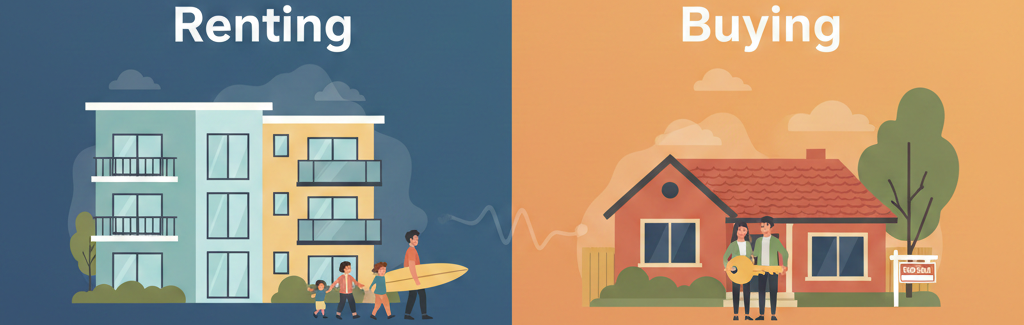
Deciding whether to rent or buy a home in Australia is one of the most significant financial choices you’ll make. The decision is no longer as simple as it once was.
Rather than asking “Which is better?”, a more useful question is: Which option best aligns with your financial position, lifestyle plans, and long-term goals? Below, we break down the key financial considerations to help you make a more informed choice.
Understanding the True Cost of Renting
Renting is often viewed as the more accessible option, particularly for people earlier in their careers or those who value flexibility.
Upfront and ongoing costs
Renting typically involves lower upfront costs. In most states and territories, you’ll need to pay a rental bond (usually equivalent to four weeks’ rent) plus rent in advance. Ongoing costs are also simpler; council rates, insurance, and repairs are generally the landlord’s responsibility.
Flexibility and mobility
You are not locked into a long-term loan, and you can usually relocate at the end of a lease with relatively short notice. This is valuable if your income is variable or you require mobility.
The risk of rising rents
Exposure to rent increases is a major drawback. Rent payments do not build equity, meaning you need a separate investment strategy if wealth creation is a priority.
The Financial Reality of Buying
Buying a home is often associated with stability and long-term security, but it comes with significant financial responsibilities.
Upfront costs to prepare for
Beyond the deposit (5% to 20%), buyers must budget for stamp duty, legal fees, building inspections, and loan establishment costs. These expenses add up quickly.
Mortgage and Ownership
Mortgage repayments are usually the largest ongoing cost. Council rates, home insurance, and maintenance are ongoing costs that renters typically avoid.
Building equity
Each repayment reduces your loan balance, acting as a forced savings mechanism. Owning a home outright by retirement significantly reduces living expenses later in life.
Key Financial Factors to Compare
Making the Right Decision for You
There is no universally correct answer to the rent-versus-buy question. The right choice depends on your income stability, savings, career plans, family situation, and tolerance for financial risk.
If you plan to stay in one location long term, have stable income, and are comfortable managing the costs of ownership, buying may support your long-term financial security. If flexibility, lower upfront costs, and reduced responsibility appeal more to your current situation, renting can be a sensible and strategic choice.
Make sure you do plenty of research, and, if you need additional guidance, it’s a good idea to speak to a financial adviser or mortgage broker at Pinpoint Finance.
Frequently Asked Questions
It depends on the location, property type, and interest rates. In some areas, renting can be cheaper in the short term, especially when factoring in upfront buying costs. However, buying may be more cost-effective over the long term if property values increase and rents continue to rise.
Many lenders prefer a 20% deposit to avoid lenders mortgage insurance, but some buyers may be able to purchase with as little as 5% under certain schemes. A smaller deposit can make buying sooner possible, but it may increase overall loan costs.
Not necessarily. Renting does not build property equity, but it can allow you to invest or save in other ways. The key is having a clear financial plan so that rent payments do not prevent you from working towards long-term financial goals.